TURCK BI10-M30-AD4X-H1141 Proximity Sensor 1PC
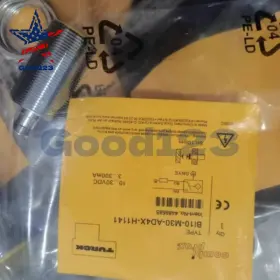
( Brand: Turck ), ( Manufacturer Part Number: BI10-M30-AD4X-H1141 ), ( Part Type: Sensor ), ( Country Of Origin: China )
Review TURCK 1pc New Proximity Sensor
The Turck BI10-M30-AD4x-H1141 is a versatile proximity sensor designed for reliable and accurate detection of objects in various industrial applications. This sensor is part of Turck's extensive range of sensor solutions, and its compact design makes it an ideal choice for space-constrained environments.
The BI10-M30-AD4x-H1141 is a proximity sensor based on the latest capacitive sensing technology. It features a large sensing area of 30mm in diameter, allowing it to detect objects up to 11mm in size from a distance of up to 12mm. This sensor is designed for use with non-magnetic materials and can be used to detect objects made of various materials such as metal, plastic, or glass.
The sensor's housing is made of high-quality, impact-resistant polyamide, ensuring robustness and durability in harsh industrial environments. It is also IP67 rated, making it protected against dust and water jetting. The sensor's operating temperature range is from -20 C to 80 C, making it suitable for use in a wide range of temperature conditions.
The BI10-M30-AD4x-H1141 is a digital sensor, providing high resolution and accuracy. It features a configurable switching output that can be set to either NO or NC, and it can be used in various industrial automation applications such as presence detection, object detection, and position sensing. The sensor also features a diagnostic LED that indicates its status, making it easy to troubleshoot.
In summary, the Turck BI10-M30-AD4x-H1141 is a high-performance, compact, and versatile proximity sensor designed for reliable and accurate object detection in various industrial applications. Its large sensing area, digital output, and robust housing make it an ideal choice for demanding environments, and its IP67 rating and wide temperature range ensure reliability and durability.
Pros and Cons of buying a Turck BI10-M30-AD4X-H1141 Proximity Sensor
Introduction:The Turck BI10-M30-AD4X-H1141 is a proximity sensor designed for various industrial applications. This sensor employs the H11 series housing and features a switching output. In this analysis, we will discuss the potential advantages and disadvantages of purchasing a Turck BI10-M30-AD4X-H1141 proximity sensor.
Pros:1. Versatility: The sensor can be used in a wide range of applications due to its adjustable sensitivity that allows it to detect various object sizes and materials.
2. Robust design: The sensor is designed with an IP67 protection rating, making it suitable for harsh industrial environments and ensuring its resistance to water and dust.
3. Compact size: The sensor has a compact design, allowing it to be easily integrated into confined spaces and tight installations.
4. Switching output: The sensor provides a switching output, which makes it easier to interface with other control systems and simplifies wiring requirements.
5. High reliability: Turck is a reputable manufacturer known for producing high-quality sensors, ensuring the reliability and durability of the BI10-M30-AD4X-H1141 sensor.
Cons:1. Limited communication options: The sensor does not support various communication protocols, which could limit its compatibility with some systems and applications.
2. Requires external power: The sensor requires an external power source, which could add to the overall installation cost and complexity.
3. Potential sensitivity issues: Depending on the application, the sensor's sensitivity might need frequent adjustments, which could be time-consuming and require additional effort.
Conclusion:The Turck BI10-M30-AD4X-H1141 proximity sensor offers several advantages, such as its versatility, robust design, compact size, switching output, and high reliability. However, it also comes with some disadvantages, including limited communication options, the requirement for an external power source, and potential sensitivity issues.
Recommendation:If your application requires a proximity sensor with a switching output, and you are looking for a robust and versatile solution, the Turck BI10-M30-AD4X-H1141 sensor could be an excellent choice. However, if your application demands communication protocols other than what the sensor offers, or you prefer a sensor with onboard power supply, you may need to consider alternative options.
Details:
part #: bi10m30ad4xh1141 prices
- $75.09-$149.00
specifications induservo:
- brand: Turck
- mpn: Bi10-m30-ad4x-h1141
- part type: Sensor
- country of origin: China
returns induservo:
- policy: Returns Accepted
- method: Money back
- time: 30 Days
- paid by: Seller
general induservo:
- Drives Starters > Drives Motor Controls > Servo Drives Amplifiers
- condition: New
seller induservo:
- city: Flushing, New York
- rating: 100.0%
- # reviews: 50
payments induservo:
- other
- credit card: Discover
- wallet: Paypal
offer induservo:
- availability: In Stock
- options: Ship-to-home
- sold: 0
- started: January 24, 2026
shipping induservo:
- service: Standard
- class: Standard
- transit: 11-17 Days
- cost: $0.00
- type: Fixed
Turck BI10-M30-AD4X-H1141 Is Similar To:
- O E M Bi10-m30-az3x New Turck Proximity Switch Sensor Inductive 20-250vac 10mm Sensing (48.5% similar) New 1PCS proximity switch sensor BI10-M30-AZ3X Turck plc module yp...(January 8th, 2025)
- Turck Fldp-iom124-0002 1pcs New A2 6825348 Module Via Dhl Or Fedex (37.3% similar) Return police: 1PCS new Turck FLAP-IOM124-0002 a2 6825348 module via DHL or FedEx # dear customer, there is one things need to be noticed before placing an order. It will just take you 1 minute. Please leave a telephone number for on-time delivery...(February 24th, 2025)
- Turck Bi5um18rp6xh1141 New1 Pcs Proximity Sensor Bi5u-m18-rp6x-h1141 (61% similar) 1PC Turck BI5U-M18-RP6X-H1141 BI5UM18RP6XH1141 new proximity sensor...(April 23rd, 2025)
- Turck Bi10u-m18-ap6x-h1141 Proximity Switch Sensor For 10-30vdc 200ma Sn 10mm-us (58.5% similar) Specs: 100% brand new and high quality. Proximity switch sensor for Turck BI10U-M18-AP6X-H1141 10-30VDC 200MA Sn 10MM, 1 x 10MM. voltage : 10-30VDC. Model: BI10U-M18-AP6X-H1141. Type: proximity switch...(June 21st, 2025)
- Turck Ni8m18ap6xh1141 1pcs New Proximity Sensor Ni8-m18-ap6x-h1141 El26 (66.1% similar) The product is a new Turck proximity sensor with the model number NI8-M18-AP6X-H1141. This inductive sensor is designed for dc currents and ideal use in industrial automation motion control systems...(December 20th, 2025)
- Turck Bi15ucp40ap6x2h1141 Bi15u-cp40-ap6x2-h1141 Brand New Bl (48.6% similar) The product is a brand new Turck BI15U-CP40-AP6X2-H1141 servo drive, designed for industrial automation and motion control applications. This drive is specifically manufactured by Turck, ensuring quality and reliability for your automation needs. With its unique manufacturer part number, this...(December 22nd, 2025)
- Turck Ru300u-m30e-2up8x2t-h1151 Ultrasonic Sensor 300 3000mm Pnp New (45.8% similar) Part #: Turck RU300U-M30E-2UP8X2T-H1151 for sale...(February 1st, 2026)
- Turck Blcen-4m12mt-4ai-vi New turck Id 6811468 Module (28.6% similar) BLCEN4M12MT4AIVI. 24 CDC supply. 4 analog inputs. 10 / 100 bps...(February 19th, 2026)
- Turck Ni20u-m30-ap6x-h1141 New Proximity Switch Sensor Free Shipping 6b (68.9% similar) NI20U-M30-AP6X-H1141 proximity switch sensor. Free shipping...(April 3rd, 2026)
- Turck Ni14-m18e-ap6x-h1141 Brand New (55.8% similar) Turck prox sensor...(April 14th, 2026)
