MITSUBISHI ELECTRIC MC116C Board BN634A112G51D MCII6C
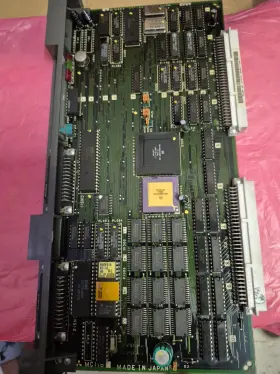
( Brand: Mitsubishi Electric ), ( Manufacturer Part Number: MC116C ), ( Part Type: Board ), ( Modified Item: No )
Review MITSUBISHI ELECTRIC New Board
The Mitsubishi Electric MC-F Series, specifically the MC116C BN634A112G51D board, is a versatile and advanced microcontroller solution designed for various industrial automation applications. This board is a crucial component of the Mitsubishi MELSEC iQ-R series, which is known for its high performance, reliability, and ease of use.
The MC116C board features a 16-bit R3000H CPU with a maximum clock speed of 3 MHz, providing ample processing power for complex control algorithms and data processing tasks. It comes with an onboard flash memory of 256 KB and SRAM of 8 KB, allowing for extensive program storage and fast data access.
One of the most notable aspects of this board is its extensive I/O capabilities. It has a total of 128 digital inputs and 128 digital outputs, which can be configured as general-purpose I/O, PWM outputs, or various communication interfaces such as CAN, Ethernet, or RS-232/485. The board also includes 16 analog inputs, each with a resolution of 12 bits, enabling precise measurement of voltage and current signals.
The MC116C board also features onboard communication interfaces, including Ethernet, Serial I/O, and CAN bus. These interfaces allow for seamless communication with other devices, such as sensors, actuators, and HMIs, making it easier to build complex automation systems.
Additionally, the board supports various programming languages, including Function Block Diagram (FBD), Ladder Logic (LL), Structured Text (ST), and Instruction List (IL), making it accessible to a wide range of engineers and technicians. The Mitsubishi iQ-R Expert software can be used to program and configure the board, offering a user-friendly and intuitive interface.
The MC116C BN634A112G51D board is designed with industrial applications in mind, featuring a robust construction and a wide operating temperature range of -20 C to 70 C. It is also compliant with various international safety standards, such as UL, CE, and CSA, ensuring safe and reliable operation in various industrial environments.
In summary, the Mitsubishi Electric MC116C BN634A112G51D board is a powerful and versatile microcontroller solution for industrial automation applications. Its extensive I/O capabilities, onboard communication interfaces, and support for various programming languages make it a valuable tool for building complex automation systems. Its robust construction and compliance with international safety standards ensure safe and reliable operation in various industrial environments.
Mitsubishi Electric MC-F Series Inverter Board MC116C (BN634A112G51D) - A Comprehensive Analysis
Introduction:The Mitsubishi Electric MC116C (BN634A112G51D) is a variable frequency drive (VFD) or an inverter board from the MC-F Series designed for industrial applications. In this analysis, we will discuss the key features, advantages, disadvantages, and a conclusion to help you make an informed decision about purchasing this inverter board.
Features:1. Rated power: The MC116C has a continuous output power of 115 kW and a maximum output power of 150 kW.
2. Voltage and frequency: It supports a wide voltage range of 200-690V and a frequency range of 50-60 Hz.
3. Protection functions: The inverter board comes with various protection functions like overcurrent, overvoltage, undervoltage, overtemperature, and overload protection.
4. Communication functions: It offers communication functions like Modbus, PROFIBUS, and CAN bus for easy integration into various control systems.
5. Efficiency: The MC116C has high efficiency, with a power factor of up to 0.95, making it a cost-effective choice for industrial applications.
Advantages:1. High power rating: The MC116C can handle high power loads, making it an ideal choice for heavy industrial applications.
2. Wide voltage range: Its ability to operate on a wide voltage range makes it suitable for use in various industrial environments.
3. Protection functions: The inverter board's built-in protection functions ensure the safe operation of the motor and the inverter board itself.
4. Communication functions: The availability of various communication functions simplifies the integration process and enables seamless communication between the inverter board and other control systems.
5. High efficiency: The high efficiency of the MC116C reduces energy consumption and lowers operating costs.
Disadvantages:1. Cost: The MC116C is a high-performance, industrial-grade inverter board, and its cost reflects its capabilities.
2. Complex installation: Installing the MC116C may require specialized knowledge and expertise, which could add to the installation cost.
3. Size: The inverter board is relatively large and heavy, which may require additional space and support during installation.
Conclusion:The Mitsubishi Electric MC116C (BN634A112G51D) is a high-performance, industrial-grade inverter board with a wide voltage range, various protection functions, and high efficiency. Its advantages include its ability to handle high power loads, communicate with various control systems, and operate in a wide voltage range. However, its disadvantages include its high cost, complex installation process, and large size.
Recommendation:If you are looking for a high-performance inverter board for heavy industrial applications and have the necessary budget and expertise for installation, the Mitsubishi Electric MC116C (BN634A112G51D) is a solid choice. However, if you have lower power requirements or a limited budget, there are other, more cost-effective options available in the market. In such cases, it is recommended to consider alternative inverter boards with similar features but lower power ratings and more affordable prices.
Details:
part #: mc116c prices
- $999.00-$1250.00
specifications induservo:
- brand: Mitsubishi Electric
- mpn: Mc116c
- part type: Board
- modified item: No
general induservo:
- condition: New Open box
- Drives Starters > Drives Motor Controls > Servo Drives Amplifiers
shipping induservo:
- service: UPS Ground
- cost: $79.00
- transit: 4-10 Days
- type: Fixed
- class: Standard
- carrier: UPS
returns induservo:
- policy: Returns Accepted
- method: Money back
- paid by: Buyer
- time: 30 Days
payments induservo:
- credit card: Discover
- wallet: Apple-pay
- other
seller induservo:
- city: Niagara Falls, New York
- # reviews: 172
- rating: 100.0%
offer induservo:
- best offers: True
- quantity: 1
- availability: In Stock
- sold: 0
- started: June 27, 2025
- options: Ship-to-home
Mitsubishi Electric MC116C Is Similar To:
- Mitsubishi Electric Mr-sa152 Servo Drive Used Tested Ok Free Ship (46.8% similar) Item specifics: brand: Mitsubishi Electric, type: servo drive, model : MR-SA152, mpn: MR-SA152. 25B-D024N114 Allen-Bradley sear a power flex 525 ac drive new factory sealed. New list item. 1PC used Abby 3HAC029157-001 DSQC668 robot axis computer unit. New Allen-Bradley 140M-C2E-C16 motor...(May 20th, 2024)
- Mitsubishi Electric Mrj440a Mr-j4-40a Ac Servo Motor Amplifier Drive (43.2% similar) Mitsubishi MR-J4-40A ac servo motor amplifier drive...(May 20th, 2024)
- Mitsubishi Electric Mr-j3w-22b 200w Ac Servo Drive (48.6% similar) With a power rating of 200 w and current type ac, it is suitable for use in variety industrial automation motion control applications. The drive is designed for use with 3-PHASE motors and suitable servo drives amplifiers, motor controls, starters...(May 20th, 2024)
- Mitsubishi Electric Mr-j2s-500b s276 Servo Drive Mrj2s500b 5kw 24679 (39.7% similar) FDA.gov/cadre/divvies/. The item has been cleaned and handled in accordance with the manufacturers instructions...(May 20th, 2024)
- Mitsubishi Electric Mrj410brj020 Mr-j4-10b-rj020 Servo Drive Amplifier T192733 (38.5% similar) Power: 100WINPUT: 3AC/AC200-240V 0.9A/1.5A 50/60 hotpot: 3PH170V 0-360HZ 1.1 STD. IRC/en 61800-5-1 man. Mitsubishi MR-J4-10B-RJ020 servo drive amplifier T192733 warranty information: this is a used item, in good condition and includes 30 day warranty. Ibo Na 0300175MAX...(May 20th, 2024)
- Mitsubishi Electric Fca635msyj Refurbished Control Module (52.6% similar) 12-MONTH warranty on most new and refurbished products, otherwise noted. Refurbished Mitsubishi FICA 635 MSG control module. Technical support. Free ground shipping. Unit needs to be in repairable condition qualify for an exchange credit. Save more than 50%. Core/exchange credit...(May 21st, 2024)
- Mitsubishi Electric Mds-c1-v2-3535-n Refurbished Servo Drive 500 Core Credit (46.6% similar) Core/exchange credit. Free ground shipping. New Mitsubishi MD'S-C1-V2-3535-N servo drive. Technical support. Some products will not qualify for expedited shipping. Unit needs to be in repairable condition qualify for an exchange credit. 12-MONTH warranty on most new and refurbished...(May 21st, 2024)
- Mitsubishi Electric Hc703bs-e51 Refurbished Servo Motor (51.8% similar) Some products will not qualify for expedited shipping. Save more than 50%. 12-MONTH warranty on most new and refurbished products, otherwise noted. Core/exchange credit. Technical support. Refurbished Mitsubishi HC703BS-E51 servo motor. Free ground shipping. Unit needs to be in...(May 23rd, 2024)
- Mitsubishi Electric Mds-b-sph-185 Spindle Drive Warranty (44.2% similar) Missile, IL 61552. Same day shipping if purchase is completed by 2PM CST. 90 day warranty...(May 24th, 2024)
- Mitsubishi Electric Q312db 13 Slock Rack Base Unit 5vdc 0.24a (50.8% similar) Mitsubishi Q312DB 13 slick rack base unit 5VDC 0.24A...(May 28th, 2024)
- Mitsubishi Electric Rj312 Refurbished Pcb (53.1% similar) Some products will not qualify for expedited shipping. Free ground shipping. Unit needs to be in repairable condition qualify for an exchange credit. Save more than 50%. Core/exchange credit. 12-MONTH warranty on most new and refurbished products, otherwise noted. Technical support...(May 28th, 2024)
