PANASONIC MDDHT5540BA1 Servo Driver 1PC
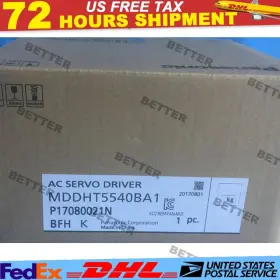
( Brand: Panasonic ), ( Manufacturer Part Number: MDDHT5540BA1 ), ( Type: Sevro Drives )
Review PANASONIC Us Free Tax 1pc Servo Driver New
The Panasonic MDDHT5540BA1 Servo Driver is a versatile and high-performance electric actuator control device designed to meet the demands of various automation applications. This servo driver comes as a single unit, making it an ideal choice for small to medium-sized projects.
The MDDHT5540BA1 Servo Driver is equipped with advanced features to ensure precise and efficient control of electric actuators, such as servo motors. It boasts a continuous current output of 5A and a peak current output of 10A, making it suitable for a wide range of actuator sizes and applications.
This servo driver supports a variety of communication interfaces, including CANopen, J1939, and RS-232, enabling seamless integration with various automation systems. It also features adjustable acceleration and deceleration rates, as well as a programmable torque control function, which allows for fine-tuned control of motion.
The MDDHT5540BA1 Servo Driver is built with reliability in mind. It has an operating temperature range of -20 C to 70 C and is protected against overcurrent, overvoltage, and overheating, ensuring long-lasting performance. Additionally, it comes with an optional brake function, which holds the actuator at its final position when power is disconnected.
This servo driver is easy to install and use, thanks to its compact size and intuitive control interface. It also comes with various protection functions, such as overload protection and thermal protection, which help prevent damage to the device and the connected equipment.
The Panasonic MDDHT5540BA1 Servo Driver is a valuable addition to any automation project that requires precise and efficient control of electric actuators. With its advanced features, versatile communication interfaces, and robust design, it offers reliable and accurate performance, making it a smart investment for automation professionals.
The Panasonic MDDHT5540BA1 servo driver is a versatile and powerful device designed for controlling DC motors with high precision. Here are some pros and cons that may help you make an informed decision about purchasing this servo driver:
Pros:1. High torque capacity: This servo driver can handle high torque motors, making it suitable for applications that require heavy lifting or precise control.
2. Wide voltage range: The Panasonic MDDHT5540BA1 can operate on a wide range of voltages, from 12V to 48V, making it a flexible option for various applications.
3. Smooth operation: With a max speed of 5.5 ms/60 degrees and a resolution of 1.8 degrees, this servo driver offers smooth and precise control, which is essential for applications that require high accuracy.
4. Protection features: The servo driver comes with overcurrent, overvoltage, and overheat protection, which helps prevent damage to the motor and the servo driver.
5. Multi-axis control: The Panasonic MDDHT5540BA1 supports multi-axis control, allowing you to control multiple motors simultaneously.
Cons:1. Cost: Compared to some other servo drivers in the market, the Panasonic MDDHT5540BA1 can be relatively expensive.
2. Complex setup: Setting up this servo driver may require some technical expertise, especially for advanced features like multi-axis control.
3. Limited communication options: This servo driver does not support advanced communication protocols like CAN bus or Ethernet, which may be a limitation for some applications.
In conclusion, the Panasonic MDDHT5540BA1 servo driver is a powerful and versatile option for applications that require high precision control and high torque capabilities. Its wide voltage range, protection features, and smooth operation make it a popular choice among engineers and hobbyists. However, its cost and complex setup may be a limitation for some users, especially those with limited budgets or technical expertise.
Recommendation:If you are looking for a high-performance servo driver with a wide voltage range and high torque capacity, the Panasonic MDDHT5540BA1 is an excellent option to consider. However, if cost is a concern, or if you require advanced communication protocols or a simpler setup, you may want to explore other options in the market. Ultimately, the decision depends on your specific application requirements and budget.
Details:
part #: mddht5540ba1 prices
- $699.00-$912.04
specifications induservo:
- brand: Panasonic
- mpn: Mddht5540ba1
- type: Sevro Drives
general induservo:
- Drives Starters > Drives Motor Controls > Servo Drives Amplifiers
- condition: New
offer induservo:
- started: November 6, 2025
- sold: 0
- best offers: True
- quantity: 5
- options: Ship-to-home
- availability: In Stock
returns induservo:
- paid by: Seller
- policy: Returns Accepted
- time: 30 Days
- method: Money back
payments induservo:
- credit card: Visa
- wallet: Paypal
- other
shipping induservo:
- transit: 6-12 Days
- class: Standard
- cost: $0.00
- type: Fixed
- service: Standard
seller induservo:
- # reviews: 46
- city: Orlando, Florida
- rating: 97.4%
Panasonic MDDHT5540BA1 Is Similar To:
- Panasonic Maddt1205 Ac Servo Drive 200-240v 1.3a Parts Only (51.7% similar) Item is sold as pictured. Panasonic MADDT1205 ac servo drive, 200-240V, 1.3A. This is a parts only item and sold as. Prices for these options may differ from standard ground shipping. Ups next day am. Parts only, unit has broken connector plug, refer to pictures. These services include...(May 21st, 2024)
- Panasonic Dv85010ldmbv Used And Tested Servo Drive (59% similar) Used tested Panasonic DV85010LDMBV servo drive. Package content: 1 x used tested Panasonic DV85010LDMBV servo drive. Pressure range. Product feature. Temperature range. Product specifications...(May 24th, 2024)
- Panasonic Msd153a2v 200v 1500w In 6.1a Out 9.4a Ac Servo Drive (47.9% similar) Part #: Panasonic MSD153A2V for sale...(May 27th, 2024)
- Panasonic Msda013d1a Used And Tested Servo Drive (62.1% similar) Product specifications: brand name. Used tested Panasonic MSDA013D1A servo drive. Package content: 1 x used tested Panasonic MSDA013D1A servo drive. Product feature: Panasonic MSDA013D1A...(June 2nd, 2024)
- Panasonic Msd043a1xxv Used And Tested Servo Driver (64.8% similar) Used tested Panasonic MSD043A1XV servo driver...(June 7th, 2024)
- Panasonic Mcdht3520l01 Ac Servo Drive 750w 1ph 3ph 200-240v Rs-232 Rs-485 Usb With 2x Cables (44.9% similar) We ll make your life easier by offering the best value proposition. Dell and new products. Our relationship allows for access to source support and. Warranty: products are not covered under warranty unless specified in the ad. Networking and components...(June 12th, 2024)
- Panasonic Dsa05a1k Servo Driver Type Zk (59.6% similar) Servo driver off a Muzak laser, lightly used and kept clean taken care of...(June 17th, 2024)
- Panasonic Maddt1205n Servo Drive T232872 (58.9% similar) Panasonic MADDT1205N servo drive T232872 warranty information: this is a used item, in good condition and includes 30 day warranty...(June 18th, 2024)
- Panasonic Msda4aca1a04 40w 19-30v 3ph Ac Servo Drive (59.8% similar) If a lift gate is needed for delivery, please let us know upon quote request...(June 23rd, 2024)
- Panasonic Dv88010ldm04 Used And Tested Servo Drive (57.1% similar) Delivery details. Return warranty...(July 4th, 2024)
- Panasonic Mdddt3530 Used And Tested Servo Drive (66.7% similar) The product at fixed price, please pay as soon possible after the purchase. Return police: serious buyers only, please. Please leave a telephone number for on-time delivery. Shipping detail. It will just take you 1 minute. You should receive the item within 2-4 weeks...(July 4th, 2024)
