MITSUBISHI MR-JET-300G-N1 Servo Drive
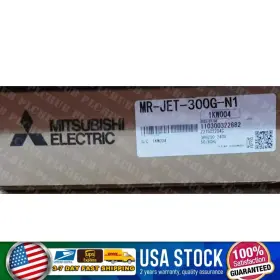
( Brand: Mitsubishi ), ( Manufacturer Part Number: MR-JET-300G-N1 ), ( Part Type: Servo Drive )
Review MITSUBISHI New Servo Drive
The Mitsubishi MR-JET-300G-N1 Servo Drive is a versatile and high-performance industrial automation component designed to deliver precise control and efficient power management in various applications. This servo drive is part of Mitsubishi Electric's MR-J series, which is renowned for its reliability, durability, and advanced features.
The MR-JET-300G-N1 Servo Drive is capable of delivering a continuous output power of 300 watts and a peak output power of 600 watts. It is suitable for driving motors with a voltage range of 200V AC or 24V DC, making it a versatile option for various industrial automation systems. The servo drive utilizes a vector control technique to ensure optimal torque and speed performance, enabling it to respond quickly and accurately to changing process conditions.
This servo drive features an advanced digital interface, including CANopen and Serial Communications Interface (SCI) protocols, which allow seamless integration with various control systems and PLCs. It also includes built-in functions such as regenerative energy recovery, position control, velocity control, and torque control, providing flexibility and ease of use for a wide range of automation applications.
The MR-JET-300G-N1 Servo Drive is designed with a compact and rugged housing, ensuring that it can withstand the harsh industrial environment while maintaining its high-performance characteristics. It also includes various protection functions, such as overcurrent protection, overvoltage protection, and thermal protection, ensuring the safety and reliability of the system.
Furthermore, the servo drive offers various communication functions, including remote I/O, motion control, and parameter setting, which can be accessed through the graphical user interface (GUI) on the drive or through the MELSOFT GX Works3 software.
In summary, the Mitsubishi MR-JET-300G-N1 Servo Drive is a high-performance and versatile industrial automation component that delivers precise control, efficient power management, and seamless integration with various control systems. Its rugged design, advanced features, and protection functions make it a reliable and durable option for various industrial automation applications.
Mitsubishi MR-JET-300G-N1 Servo Drive: Pros, Cons, and Concluding Recommendation
The Mitsubishi MR-JET-300G-N1 servo drive is a popular choice for industrial automation applications. Let's examine some of its key features, advantages, and disadvantages:
Pros:1. High Performance: This servo drive offers high torque density and fast response times, making it suitable for applications requiring precise motion control.
2. Energy Efficiency: The MR-JET-300G-N1 is designed to minimize power consumption, which can lead to energy savings and reduced operational costs.
3. Built-in Safety Functions: This servo drive comes with various safety features, such as overcurrent protection, overload protection, and overtemperature protection, ensuring safe operation.
4. Versatile Connectivity: It supports various communication protocols, including CANopen, EtherNet/IP, and Modbus, enabling seamless integration with various automation systems.
Cons:1. Cost: The MR-JET-300G-N1 servo drive is more expensive compared to some other servo drives in the market due to its advanced features and high performance.
2. Complex Installation: This servo drive may require more time and expertise to install and configure compared to simpler models, due to its extensive features and customization options.
Concluding Recommendation:The Mitsubishi MR-JET-300G-N1 servo drive is an excellent choice for applications requiring high precision, energy efficiency, and built-in safety features. Its versatile connectivity options make it suitable for various industrial automation systems. However, its higher cost and complex installation may not be ideal for smaller projects or applications with simpler motion control requirements.
Therefore, if your application demands high performance, energy efficiency, and advanced safety features, the Mitsubishi MR-JET-300G-N1 servo drive is a strong recommendation. However, if your project has more modest requirements or a limited budget, you may want to consider alternative servo drives with simpler features and lower costs.
Details:
part #: mrjet300gn1 prices
- $708.05-$839.30
specifications induservo:
- brand: Mitsubishi
- mpn: Mr-jet-300g-n1
- part type: Servo Drive
offer induservo:
- best offers: True
- started: August 21, 2025
- availability: In Stock
- sold: 0
- quantity: 20
- options: Ship-to-home
general induservo:
- Drives Starters > Drives Motor Controls > Servo Drives Amplifiers
- condition: New
returns induservo:
- method: Money back
- time: 30 Days
- policy: Returns Accepted
- paid by: Seller
payments induservo:
- credit card: Visa
- wallet: Paypal
- other
shipping induservo:
- transit: 7-14 Days
- class: Standard
- type: Fixed
- cost: $0.00
- service: Standard
seller induservo:
- city: Perth Amboy, New Jersey
- rating: 100.0%
- # reviews: 73
Mitsubishi MR-JET-300G-N1 Is Similar To:
- Mitsubishi Electric Mr-sa152 Servo Drive Used Tested Ok Free Ship (50% similar) Item specifics: brand: Mitsubishi electric, type: servo drive, model : MR-SA152, mpn: MR-SA152. 25B-D024N114 Allen-Bradley ser a power flex 525 ac drive new factory sealed. New list item. 1PC used Abby 3HAC029157-001 DSQC668 robot axis computer unit. New Allen-Bradley 140M-C2E-C16 motor...(May 20th, 2024)
- Mitsubishi Electric Mrj440a Mr-j4-40a Ac Servo Motor Amplifier Drive (55% similar) Mitsubishi MR-J4-40A ac servo motor amplifier drive...(May 20th, 2024)
- Mitsubishi Electric Mr-j3w-22b 200w Ac Servo Drive (68.1% similar) With a power rating of 200 w and current type ac, it is suitable for use in variety industrial automation motion control applications. The drive is designed for use with 3-PHASE motors and suitable servo drives amplifiers, motor controls, starters...(May 20th, 2024)
- Mitsubishi Electric Mr-j2s-500b s276 Servo Drive Mrj2s500b 5kw 24679 (56.4% similar) FDA.gov/cadre/divvies/. The item has been cleaned and handled in accordance with the manufacturers instructions...(May 20th, 2024)
- Mitsubishi Mr-h100b-s15-p50-ue Ac Servo Driver T170088 (65.3% similar) Mitsubishi MR-H100B-S15-P50-EU ac servo driver T170088 warranty information: this is a used item, in good condition and includes 30 day warranty...(May 20th, 2024)
- Mitsubishi Mr-h100b-s15-p50-ve Ac Servo Drive T115538 (66% similar) Mitsubishi MR-H100B-S15-P50-VE ac servo drive T115538 warranty information: this is a used item, in good condition and includes 30 day warranty...(May 20th, 2024)
- Mitsubishi Electric Mrj410brj020 Mr-j4-10b-rj020 Servo Drive Amplifier T192733 (48.7% similar) Power: 100WINPUT: 3AC/AC200-240V 0.9A/1.5A 50/60 hotpot: 3PH170V 0-360HZ 1.1 STD. IRC/en 61800-5-1 man. Mitsubishi MR-J4-10B-RJ020 servo drive amplifier T192733 warranty information: this is a used item, in good condition and includes 30 day warranty. Ibo Na 0300175MAX...(May 20th, 2024)
- Mitsubishi Mr-j2s-40b-ee085 Ac Servo Drives T209268 (67.4% similar) Mitsubishi MR-J2S-40B-EE085 ac servo drives T209268 warranty information: this is a used item, in good condition and includes 30 day warranty...(May 21st, 2024)
- Mitsubishi Mr-j2-10a Ac Servo Drive 100w T38742 (68.2% similar) Mitsubishi MR-J2-10A ac servo drive 100W T38742 warranty information: this is a used item, in good condition and includes 30 day warranty...(May 21st, 2024)
- Mitsubishi Electric Mds-c1-v2-3535-n Refurbished Servo Drive 500 Core Credit (53% similar) Core/exchange credit. Free ground shipping. New Mitsubishi MD'S-C1-V2-3535-N servo drive. Technical support. Some products will not qualify for expedited shipping. Unit needs to be in repairable condition qualify for an exchange credit. 12-MONTH warranty on most new and refurbished...(May 21st, 2024)
- Mitsubishi Mr-j2-100ct Used And Tested Servo Driver (69.6% similar) Product specifications.: used tested Mitsubishi MR-J2-100CT servo driver. Product feature...(May 22nd, 2024)
