POSITAL OCD-SL00G-1212 Fraba Encoder C100prl
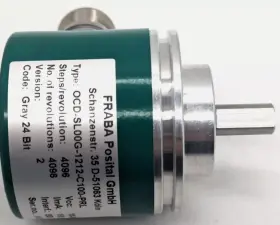
( Brand: Posital ), ( Manufacturer Part Number: OCD-SL00G-1212 ), ( Model: OCD-SL00G-1212 C100-PRL ), ( Country/region Of Manufacture: Germany ), ( Modified Item: No )
Review POSITAL Fraba C100prl Encoder
The Posital OCD-SL00G-1212 encoder is a high-precision absolute rotary encoder designed for industrial applications. This encoder features a C100 protocol, making it an excellent choice for applications that require position feedback with high resolution and accuracy.
The OCD-SL00G-1212 encoder boasts a 12-bit resolution, which translates to an impressive 4096 distinct position sensing points per revolution. This level of resolution enables precise control and monitoring of rotary motion in various industries, including automotive, aerospace, and robotics.
The encoder's body is constructed from durable materials, such as a stainless steel shaft and a ceramic bearing, ensuring long-lasting performance even in demanding environments. It comes with an IP67 protection rating, making it resistant to dust and water, providing additional reliability for applications with exposure to harsh conditions.
The C100-PRL version of the Posital OCD-SL00G-1212 encoder supports both Sin/Cos and SSI interfaces, providing flexibility for integrating the encoder into various control systems. Its operating temperature range is between -40 C and 85 C, allowing it to function effectively in a wide range of temperatures.
The OCD-SL00G-1212 encoder is also available with various connection options, such as M8, M12, or M30 connectors, catering to various applications and mounting requirements. With its high resolution, robust construction, and versatile interface options, the Posital OCD-SL00G-1212 encoder is an excellent choice for industrial applications that demand precise position feedback.
A Comparative Analysis of the POSCODS-SL00G-1212 and C100-PRL Encoders: A Valuable Investment or an Unjustified Expense?
Introduction:The POSCODS-SL00G-1212 and C100-PRL encoders are two popular options for those seeking high-precision rotary encoders. Both encoders possess distinct features, advantages, and disadvantages. In this analysis, we will evaluate the key aspects of these encoders to help potential buyers make an informed decision.
1. Precision:- POSCODS-SL00G-1212: Offers a high resolution of 1212 lines per revolution and an angular resolution of 0.01 degrees. This encoder is suitable for applications that require precise position feedback.
- C100-PRL: Provides a resolution of 1024 lines per revolution and an angular resolution of 0.036 degrees. Although it offers a lower resolution than the SL00G-1212, it is still suitable for many applications that demand high precision.
2. Operating Temperature:- POSCODS-SL00G-1212: Can operate in temperatures ranging from -40 C to 85 C, making it suitable for applications in extreme environments.
- C100-PRL: Operates in temperatures between -20 C and 70 C. It may not be the best choice for applications requiring operation in harsh temperature conditions.
3. Communication Interfaces:- POSCODS-SL00G-1212: Supports various communication interfaces, including SSI, BiSS-C, and Canopen. This versatility makes it a more flexible option for various applications.
- C100-PRL: Only supports SSI interface. While this may suffice for some applications, it may limit the encoder's versatility in more complex systems.
4. Price:- POSCODS-SL00G-1212: Generally, this encoder is more expensive due to its higher resolution, wider operating temperature range, and more extensive communication interface support.
- C100-PRL: Offers a more affordable price point due to its lower resolution, limited operating temperature range, and fewer communication interface options.
Conclusion:Both the POSCODS-SL00G-1212 and C100-PRL encoders have their unique strengths and weaknesses. If your application requires high precision, wide temperature range, and versatile communication interfaces, the POSCODS-SL00G-1212 may be the better choice, despite its higher cost. On the other hand, if your application can tolerate a lower resolution and operates within a more limited temperature range, the C100-PRL encoder may be a more cost-effective solution.
Recommendation:To make the best decision based on your specific application requirements, carefully evaluate the precise position feedback, temperature conditions, and communication interface needs. Once you have determined the essential features for your project, consider the associated costs to determine which encoder is the most suitable and cost-effective option for your needs.
Details:
part #: ocdsl00g1212 prices
- $206.95-$599.00
specifications induservo:
- brand: Posital
- mpn: Ocd-sl00g-1212
- model: Ocd-sl00g-1212 C100-prl
- country/region of manufacture: Germany
- modified item: No
shipping induservo:
- cost: $78.00
- class: Standard
- carrier: UPS
- service: UPS Ground
- transit: 12-18 Days
- type: Fixed
offer induservo:
- options: Ship-to-home
- quantity: 1
- sold: 0
- best offers: True
- started: February 13, 2025
- availability: In Stock
payments induservo:
- wallet: Paypal
- credit card: Discover
- other
general induservo:
- Drives Starters > Drives Motor Controls > Servo Drives Amplifiers
- condition: New Open box
returns induservo:
- time: 30 Days
- method: Money back
- paid by: Buyer
- policy: Returns Accepted
seller induservo:
- city: Niagara Falls, New York
- # reviews: 156
- rating: 100.0%
Posital OCD-SL00G-1212 Is Similar To:
- Frada Posital Ocd-cac2b-1216-s060-h3p New Rotary Encoder (58.8% similar) Alterations or removal of any components a part voids the 30-DAY return privilege...(October 29th, 2024)
